
Uganda Coffee Tourism: The Rise of East Africa's Next Coffee Trail
- 27 Aug, 2026
- Home
- 0 Comments
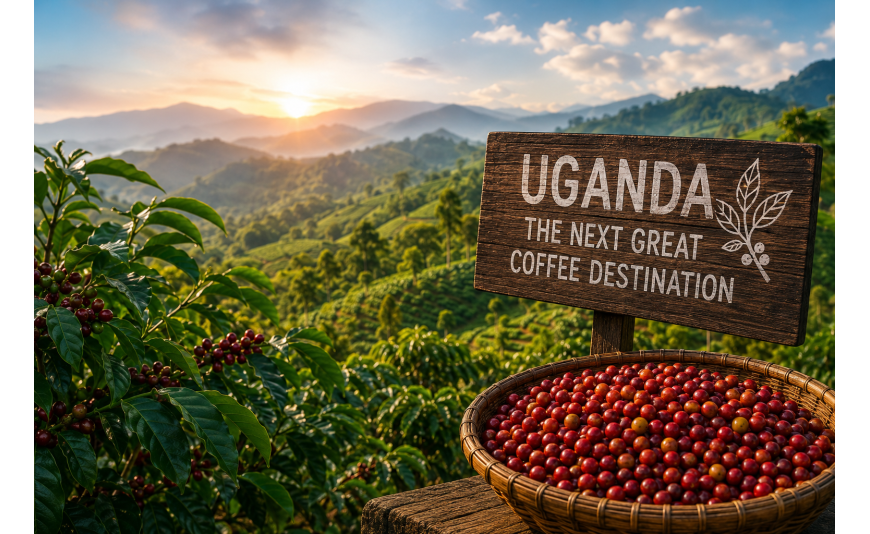
Beyond the Safari: Uganda Wants the World to Travel for Coffee
From the slopes of Mount Elgon to Western Uganda’s coffee farms, a new kind of journey is taking shape — one where visitors don’t just drink Ugandan coffee, but follow it from soil to cup.
For generations, Uganda has been one of East Africa’s great coffee-producing nations. Its beans travel far beyond its borders, finding their way into cafés, roasteries and homes around the world.
But Uganda now wants travellers to do something different.
It wants them to follow the coffee home.
The country is moving to transform coffee from an agricultural export into a tourism experience — connecting farms, farmers, processing, roasting, tasting, culture and Uganda’s spectacular landscapes into a destination story.
And in August 2026, that ambition gained a very public international spotlight.
Hollywood actor and R&B singer Tyrese Gibson arrived in Uganda for a three-day visit linked to the launch of Explore Uganda Coffee Tourism, a campaign bringing together the Uganda Tourism Board (UTB), Kampala Capital City Authority (KCCA), the Ministry of Foreign Affairs and Africa Coffee Park.
It is another sign that Uganda’s coffee story is beginning to move beyond the export market — and into the world of experiential travel.
☕ Uganda Has the Coffee. Now It Wants the Experience.
At the Uganda Coffee and Cocoa Expo, tourism and coffee stakeholders made the case that Uganda has an opportunity sitting in plain sight.
The country already has the farms, the farmers, the landscapes and the coffee.
What it is still developing is the tourism product around them.
Uganda Tourism Board Marketing Manager Francis Nyende described agritourism as one of the fastest-growing trends in global travel, arguing that coffee provides a natural entry point because of the country's strong association with the crop.
The idea is simple but powerful:
Instead of a traveller simply buying a bag of Ugandan coffee, they could visit the farm where it was grown, meet the people who produced it, watch the cherries being processed, learn how the coffee is roasted, taste it fresh — and stay nearby.
That turns a commodity into an experience.
And an experience can create value far beyond the original bag of beans.
? East Africa Already Has a Coffee Tourism Story
Uganda is not entering an empty market.
Across East Africa, coffee is increasingly being woven into established tourism routes.
Ethiopia has long connected visitors with renowned coffee-growing origins such as Yirgacheffe, Sidamo and Harrar.
Kenya has opportunities built around high-altitude coffee regions including Nyeri and Kirinyaga.
Rwanda has developed more polished and bookable coffee experiences, often connecting them with its famous gorilla and nature tourism.
And in Tanzania, coffee can naturally become part of journeys built around Kilimanjaro and safari tourism.
Uganda has an advantage of its own:
scale.
The challenge now is turning that scale into a reason for someone to book a flight.
? From Farm Gate to Full Coffee Journey
The vision is much bigger than walking through a plantation for an hour.
A properly developed Ugandan coffee trail could take visitors through the entire value chain.
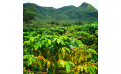
Imagine starting the morning among coffee trees, watching farmers harvest ripe cherries.
Then moving through drying and processing.
Later, learning about roasting and brewing.
And finally sitting down with a cup produced almost entirely within the same landscape.
That journey could be complemented by cycling, nature walks, cultural experiences, accommodation and local food.
At Clark Farm in Kyenjojo District, Western Uganda, the possibilities are already being demonstrated. The farm harvested more than 305 tonnes of coffee in 2025, employs 128 people, and has expanded its offering to include nature walks, cycling and farm-to-fork experiences.
This is where coffee tourism becomes particularly interesting.
The coffee remains the hero — but the surrounding experience becomes part of the product.
⛰️ Mount Elgon: Where Coffee Meets the Mountains
Few places demonstrate the potential of coffee tourism better than Uganda's eastern highlands.
Around Mount Elgon, high-altitude landscapes and fertile volcanic soils provide an exceptional setting for Arabica production.
For travellers, the attraction is not simply the flavour in the cup.
It is the opportunity to understand where that flavour comes from.
A coffee journey could mean walking through highland farms, meeting smallholder producers, seeing cherries being harvested and learning how local communities process their crop.
And then there is the landscape itself.
The mountains, villages, waterfalls and agricultural terraces provide the kind of backdrop that transforms a coffee tasting into a travel memory.
?️ From the Rwenzoris to Western Uganda
Uganda's coffee story does not stop at Mount Elgon.
Across the country, different growing regions offer different landscapes, farming systems and coffee identities.
Around the Rwenzori Mountains, famously known as the Mountains of the Moon, and further towards areas such as Masaka, coffee production creates another potential route for visitors interested in Uganda's agricultural heritage.
The country's combination of Arabica and Robusta, alongside its geographical diversity, gives coffee tourism the possibility of becoming a collection of regional experiences rather than a single destination.
That diversity could ultimately be one of Uganda's greatest strengths.
? The Numbers Behind the Coffee Tourism Ambition
There is serious money behind this idea.
Uganda's wider development ambitions include a target of increasing tourism earnings from roughly $1 billion to $4 billion by 2029/30, while broader national strategies also place major emphasis on agro-industrialisation and tourism.
The coffee industry has an even more ambitious proposal.
Inspire Africa Group, which operates the 150-acre Africa Coffee Park in Ntungamo District, has proposed growing Uganda's coffee revenue from approximately $1 billion to $5 billion within five years.
Under that proposal, around $4 billion would come from coffee exports and $1 billion from coffee tourism, in partnership with UTB.
The proposed tourism model is striking: an estimated six million visitors a year, with each purchasing around 1.2 kilograms of higher-value roasted coffee.
Whether those targets are achieved remains to be seen.
But they reveal just how seriously Uganda's coffee industry is beginning to view tourism.
? This Is Not Uganda's First Attempt
Interestingly, the idea is not entirely new.
Uganda Tourism Board formally launched a coffee-tourism strategy in January 2019.
Seven years later, however, officials are still working to establish coffee tourism as a structured and commercially attractive tourism product.
The difference now is the growing recognition that coffee tourism does not need to stand alone.
It can be attached to everything else Uganda already offers.
A traveller could trek gorillas in Bwindi, search for chimpanzees in Kibale, visit the Source of the Nile — and then follow the country's coffee story.
That creates a longer, richer itinerary.
And longer stays can mean more spending in rural communities.
? Enter Tyrese Gibson: Uganda Takes Its Coffee Story Global
The latest development gives this movement an entirely new level of visibility.
Tyrese Gibson, the American actor, singer and internationally recognised star of the Fast & Furious franchise, arrived in Uganda in August 2026 for a three-day visit connected to the launch of Explore Uganda Coffee Tourism.
The campaign is a joint initiative involving:
-
Uganda Tourism Board
-
Kampala Capital City Authority
-
Ministry of Foreign Affairs
-
Africa Coffee Park
Its purpose is to position Uganda as a destination where travellers can experience the country's coffee value chain alongside its tourism attractions and cultural heritage.
Gibson's itinerary brings the idea to life.
During his visit, he is scheduled to experience the Source of the Nile, participate in a coffee-tree planting activity, and meet coffee farmers in Western Uganda. He is also expected to meet Uganda's Head of State.
That combination — celebrity visibility, coffee, culture, agriculture and tourism — is precisely the kind of storytelling Uganda needs if it wants coffee tourism to reach audiences far beyond the traditional coffee industry.
Gibson is particularly well known internationally for his role as Roman Pearce in the Fast & Furious franchise and for his music career. His involvement therefore gives Uganda an opportunity to introduce its coffee story to an audience that may never have considered travelling to a coffee farm before.
? Coffee + Cocoa: Uganda Is Building Something Bigger
The coffee tourism conversation is also expanding.
At the Uganda Coffee & Cocoa Expo 2026, stakeholders discussed integrating both coffee and cocoa production into Uganda's tourism offering.
Pilot agricultural tourism experiences are expected to begin in selected farming regions in 2027.
The concept is bigger than sightseeing.
Visitors could meet farmers, experience production and processing, taste products at their source and learn about the communities and landscapes behind them.
For farmers, this creates another potential income stream beyond selling raw agricultural commodities.
For travellers, it creates something increasingly valuable in modern tourism:
authenticity.
??? The People Behind the Cup
Perhaps the most compelling part of coffee tourism is the human story.
A bag of coffee can tell you its origin, altitude, variety and processing method.
But standing on the farm tells you something a label cannot.
You meet the farmer.
You see the trees.
You understand the work.
You taste the environment.
And you begin to understand that coffee is not simply a product — it is the result of land, climate, knowledge, labour and generations of agricultural culture.
Bros Coffee Uganda, which works with more than 510 farmers, has highlighted the growing desire among travellers to see the source of what they drink. Stakeholders have also argued that accommodation close to farms could help keep visitors in farming communities rather than sending them back to towns after a short tour.
That could be transformational for rural tourism.
⚠️ The Road Ahead Is Not Without Challenges
Uganda's opportunity is enormous, but building a successful coffee tourism industry will require more than marketing.
Farmers still face significant constraints.
These include limited cash flow, poor roads to some farms, drought-related damage to coffee trees, quality challenges and water shortages.
Tourism infrastructure is another piece of the puzzle.
A successful coffee destination needs reliable transport, attractive accommodation, high-quality coffee, trained guides and experiences that are compelling enough to compete with established destinations across East Africa.
And there is another important question:
How much of the tourism value will actually reach farmers and local communities?
The Coffee & Cocoa Expo discussions have highlighted the importance of keeping experiences authentic and ensuring that communities benefit rather than simply becoming scenery in a tourism product.
If Uganda gets that balance right, coffee tourism could become more than another excursion.
It could become a meaningful rural development opportunity.
☕ The Future of Ugandan Coffee May Be About More Than Exporting Beans
For decades, Uganda's coffee story has largely been told through export volumes.
The next chapter could be told through experiences.
Instead of asking travellers to simply buy Ugandan coffee, Uganda is beginning to ask:
What if you came to see where it grows?
What if you walked among the trees?
What if you met the farmer?
What if you watched the cherries being processed?
What if you tasted the coffee where it was grown?
What if the journey to the cup became part of the cup itself?
That is the promise behind Uganda's emerging coffee tourism movement.
And with the Uganda Tourism Board pushing the concept, the Coffee & Cocoa Expo giving it an industry platform, the Explore Uganda Coffee Tourism campaign taking shape, and international figures such as Tyrese Gibson helping amplify the message, Uganda's coffee story is entering a fascinating new phase.
? At shop.africancity.ch, We Believe Origin Matters
At shop.africancity.ch, we believe African coffee should be experienced as more than a flavour profile on a tasting card.
Every origin carries a landscape.
Every harvest carries a season.
Every coffee carries the work of farmers and communities.
Uganda's move toward coffee tourism is a powerful reminder of that connection.
Because sometimes the best way to understand a coffee is not to ask “What does it taste like?”
It is to ask:
“Where did this story begin?”
And in Uganda, that story may soon be one worth travelling for.
Discover African coffee. Follow the story. Taste the origin.


0 Comments